
The Effect of Bladder Release Agent & Impact on Tyre Quality
The Main effects of Bladder Release agent (DBC-805) is to form a stable insulating membrane between the bladder and the inner cavity of the tyre mold. Specifically, there are four effects:
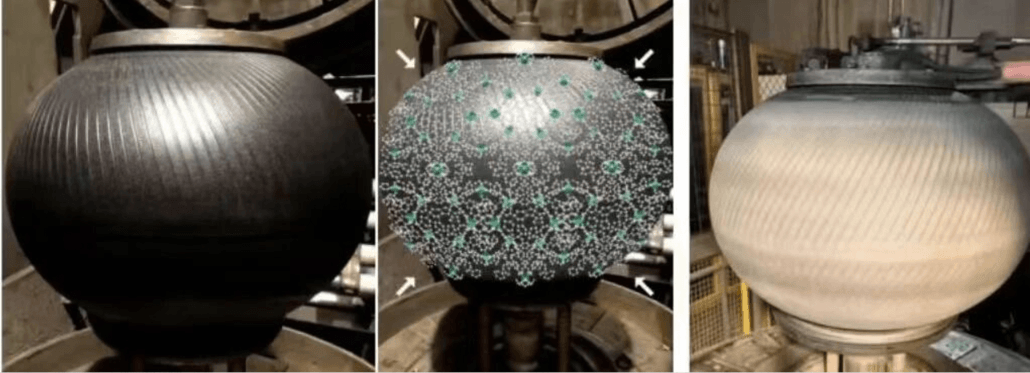
1. Anti-stick removal. Durig the curing process, the outer surface of the bladder and the adhesive in the tyre will directly stick together under high temperature and pressure. The insulator transforms this adhesion into “interface sliding,” reducing the removal resistance, so that the bladder can be smoothly extracted without sticking to the tyre.
2.Protecting the bladder and extending its lifetime. Adhesive clipping is the biggest source of bladder surface wear. When there is a membrane layer, the bladder has low friction contact with the inside of the fetus, which significantly reduces surface hair pulling, cracks, breakage, and early failure. The replacement cost of the bladder is much higher than the release agent.
3. Reduce internal defects in the tire. Avoid bladder’s wrinkles, adhesive white marks, and pull marks, making the inner surface of the tyre smoother and more consistent.
4. Stable expansion and retraction. When the membrane layer is homogeneous, the bladder expansion fits uniformly, and the “insufficient adhesion, inadequate swelling” caused by local adhesion is significantly reduced, which has indirect benefits for the sulfuric homogeneity of the shoulder and tire ring parts.
What really needs to be wary of are the negative effects of excess residues of insulators or improper selection of types, which tend to be delayed in exposure and difficult to resolve:
1. Polluting air density layers, affecting air density and interlayer adhesion
Mineral oils and inferior silicone oils based release agent will migrate and infiltrate into the tyre adhesive, forming an oil film on the surface of the inner lining, destroying the adhesion between the airtight layer and the layers of the tyre body, and creating a long-term risk of tyre layer shedding; it also has a detrimental effect on the airtightness of tubeless tires. It is easier to have loose adhesions when refurbishing, polishing, repairing, and fitting tires.
2. Coagulation and Hard Particle Pressure
Isolators that accumulate at high temperatures can carbonize and coagulate, forming hard spots, which when moulded create numb spots and dents in the car, and when severe, puncture the airtight layer. Such defects can easily be mistaken for adhesive impurities.
3. Water-based residual moisture
After spraying, the mold is formed without waiting for evaporation, which will form vaginal gas, air bubbles, and insufficient local sulphurization in the fetus. At the same time, it will also reduce the actual removal effect.
4. Unequal mass distribution
Local thick accumulations theoretically cause deviations in the mass distribution within the embryo, which should not be ignored in terms of the strict specifications that require uniformity and dynamic balance.
5. Influence on secondary processing
The Siliend foam tyre’s adhesion and inner cavity adhesion-like processes of soundproof cotton tires are extremely sensitive to the cleanliness within the tire, and residual insulators are one of the most common reasons for failure.
5. Counter-effects of insufficient release agent
Adhesion and difficulty in mold removal can lead to capsule pull injury, tyre splint distension and deformation, tyre ring dislocation, and tyre body displacement, which ultimately reflect on homogeneity and motion balance. That is, both insufficient and excessive can damage tires, but excessive is more hidden (excessive is not easy to dry and can lead to internal dampness/wetness, etc.).
6. In conclusion, the principle is thin, uniform, few and frequent: it is preferable to patch the thin film once per shift rather than spraying the thick tube once for three days. The visual criterion is “with a uniform layer of opaque film, no accumulating liquid and no leakage.” Prioritize silicones or fluorine-containing semi-permanent models on selection, avoid mineral oil bases and talcum powder: talcum powder residue dust can affect cleaning and adhesion processes in the tyre.
3. Spreading frequency (company standard different)
4. USING NOTES:
- The first 20 to 30 modules of the new capsule first installed on the platform: encryption to every 3 to 5 modules, first establishing the membrane layer, then turning on the normal frequency;
- The capsule enters the end of its lifespan (surface shiny, hardening, fine cracks): Pressure to every 2-4 mods;
- A platform with nitrogen sulfide, sulfide temperature above 155°C, and high capsule expansion rate, with the overall cycle moving forward ;
- Specifications of non-internal spray coating and soft inner lining in the fetus also need to be encrypted.
- There was a distinct “sticky-pulling” sound when pulling the capsule, and the removal resistance increased ;
- Wrinkles appear in the fetus, with local whitening and adhesive streaks ;
- The surface of the capsule shines locally, becomes sticky, changes color, and begins to coagulate ;
- The same specs began to show sporadic appearance problems in the fetus.
Summary: If any one appears, it indicates that the current interval is too long, and the concentration should be replenished and rechecked immediately. Each Curing press should has a bladder use desk book hanging next to it, recording the modulus, spraying time, dilution concentration, removal of the modulus, and the internal and external conditions of the car. A month of running can determine the optimal intervals for these capsules on this line, which is much more reliable than using general numbers. Most lines stabilize to: silicone types once per shift with every 4 to 6 modulus supplement spraying; water-based types once per shift with every 2 to 3 modulus supplement spraying.
Leave a Reply
Want to join the discussion?Feel free to contribute!